
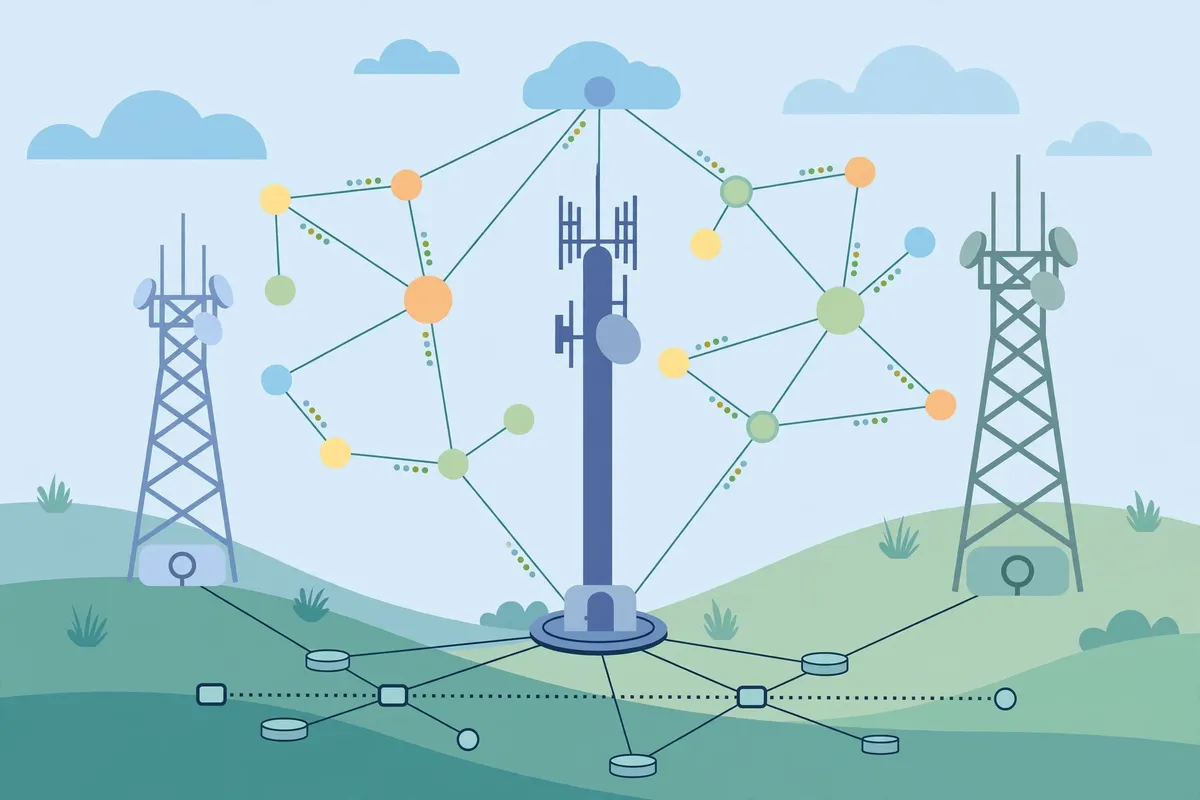

India’s phone networks are getting a behind-the-scenes upgrade. The Telecom Regulatory Authority of India (TRAI) has released the Telecommunication Interconnection (Third Amendment) Regulations, 2026, which move how telecom operators connect their networks to each other from old circuit-based links to modern IP-based interconnection — with a three-year deadline to finish the switch.
Quick Facts
- Rule: Telecommunication Interconnection (Third Amendment) Regulations, 2026
- Effective from: 1 January 2027
- New interconnections: Must be IP-based from the effective date
- Old TDM/E1 links: Must migrate to IP within three years, by 1 January 2030
- Phased migration: 20% of existing traffic shifted in year one, 55% by year two, complete by year three
- Penalty for delays: Up to Rs 1 lakh per day for the first 15 days, Rs 2 lakh per day after that, capped at Rs 1 crore per service area per instance
What Is Interconnection, and Why Does It Change?
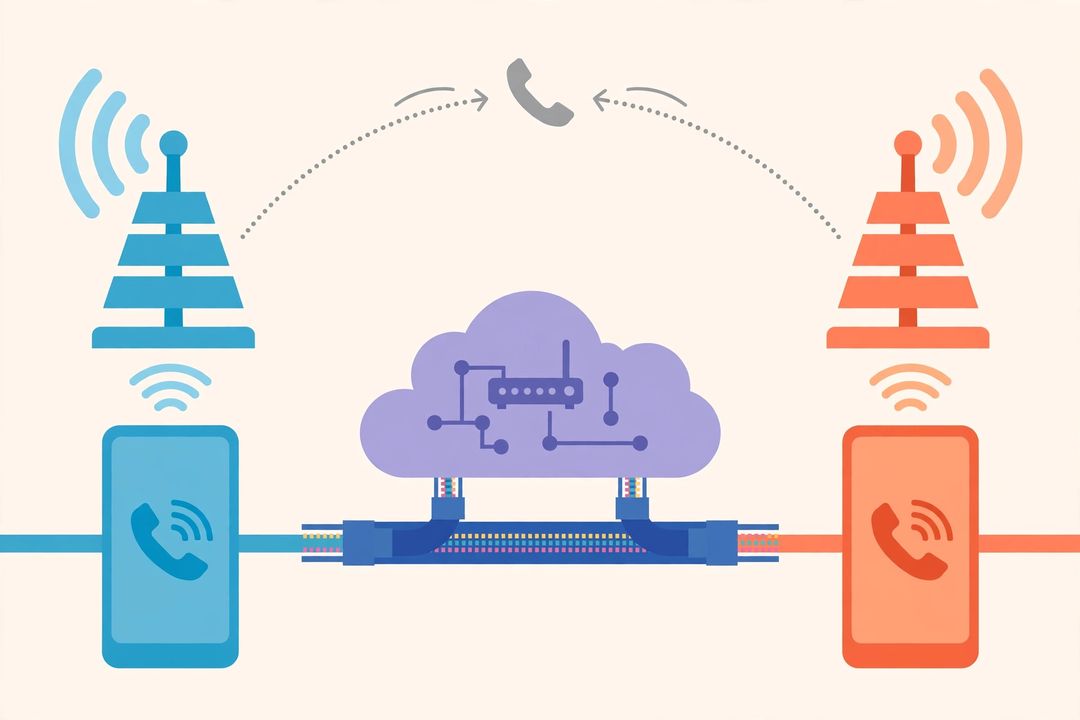
Interconnection is the arrangement that lets a Jio customer call an Airtel customer, or a Vi customer call a BSNL number — different companies’ networks exchanging traffic so subscribers can reach each other seamlessly. For years much of that exchange ran on older E1/TDM circuit-based links, which split signals into time slots on a shared path.
The new rules shift that exchange to Internet Protocol (IP) links — the same packet-based technology modern networks already use for data. TRAI says the move improves bandwidth efficiency, call quality and end-to-end call performance. One clarification that matters: this does not mean your calls travel over the public internet — these are private, managed links between operators, built on IP technology.
What the New Rules Actually Require
All new connections must be IP-based
Every interconnection established after 1 January 2027 must be IP-based. There is no new TDM link from that date onwards.
Old links get three years — in stages
Existing E1/TDM-based points of interconnection must migrate to IP within three years, with staged milestones: operators must shift 20% of their existing traffic in the first year and 55% by the second year, completing the transition by the third year. In traffic terms, that means legacy-link traffic falling to no more than 80% of its baseline after year one and 45% after year two.
Connection points move to the circle level
The rules also move interconnection from the older Long Distance Charging Area (LDCA) and Short Distance Charging Area (SDCA) levels to the Licensed Service Area (LSA) level — broadly, the telecom circle. Existing traffic at LDCA- and SDCA-level points must migrate to LSA-level points within the same three-year phased window, and operators can mutually agree on the locations for exchanging traffic.
Capacity is measured differently now
For IP-based connections, the maximum call-handling capacity at a point of interconnection will be judged on concurrent session-handling capability and link bandwidth, rather than on legacy circuit counts — with prescribed quality-of-service standards still applying.
Penalties and Other Changes
Delays in migration, interconnection provisioning and other specified obligations can attract financial disincentives of up to Rs 1 lakh per day for the first 15 days and Rs 2 lakh per day thereafter, capped at Rs 1 crore per service area for each instance of contravention.
The amendment also introduces a framework for delayed payments of interconnection charges — operators that do not clear dues within the period in their interconnection agreements will be liable for interest at a mutually agreed rate, capped at two percentage points above the State Bank of India’s one-year MCLR. Reporting requirements will let TRAI monitor both the traffic shift to LSA-level points and the TDM-to-IP migration, and the bank-guarantee period and reassessment interval have been extended from 6 to 12 months.
What Changes for You as a User?
Directly, nothing on your bill changes because of this rule — it is not a tariff or recharge change. Indirectly, it is the plumbing behind your calls: modern IP links handle capacity better and should mean fewer congestion-related call problems as networks grow. If call quality between networks improves over the next three years, this migration is part of the reason why.
Honest opinion: this is the least glamorous kind of telecom reform, and the most useful — it retires infrastructure from the circuit-switched era instead of patching it for another decade. The three-year clock, with real daily penalties, is what gives it teeth; without the milestones, “migrate when convenient” would have meant never.
How This Rule Came About
TRAI began reviewing the interconnection framework with a pre-consultation paper on 3 April 2025, followed by a consultation paper on 10 November 2025, before releasing the final amendment on 3 November 2026. The rules align the 2018 interconnection framework with the Telecommunications Act, 2023, and the Centre’s June 2026 authorisation rules. This is a separate regulation from the complaint-redressal rules notified on 2 November 2026 — those change how your complaints are handled, while these change how networks connect to each other.
Sources, as reported: Financial Express, ANI and The Hindu BusinessLine, 3 November 2026. Figures above are as reported in those outlets; the full regulation text sits with TRAI.
Related reading: TRAI New Telecom Complaint Rules 2026 • TRAI AI Guidelines for Telecom • Jio Voice Only Plans Price List in India
Do you notice a difference in call quality when calling someone on another network? Tell us in the comments — and do you think three years is fast enough for a full network upgrade?