


Deepinder Goyal — the man behind Zomato — has launched a wearable that sits on your head, not your wrist. It is called Temple, it costs Rs 85,000 in India, and it claims to track how well blood is flowing to your brain in real time. Pre-orders opened on 1 November 2026, and within days the device became one of the most talked-about gadgets in the country — partly for what it promises, and partly because doctors are questioning whether those promises hold up.
📑 On This Page
Temple Device: Quick Facts
- Price in India: Rs 85,000 (Batch 01 package price, as reported)
- Pre-orders: Opened 1 November 2026, 9:30 PM IST, in India
- Delivery: Made to order, about 3 months — early buyers can expect delivery in early 2027
- Size and weight: Less than 1 inch wide, under 2 grams
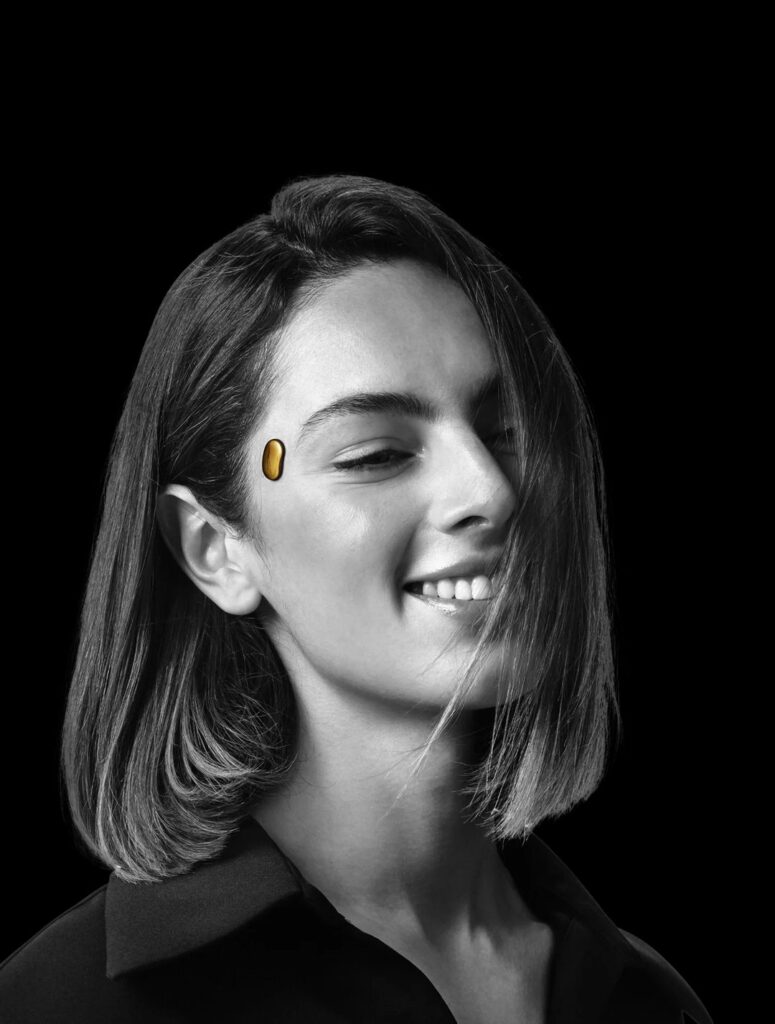
- How it is worn: Sticks to the side of the head, between the forehead and the ear, with adhesive grips
- Key features: BrainFlow (brain blood flow tracking) and Entropy score (1–250, a measure of total physiological strain)
- Colours: Six finishes — True Gold, Rose Gold, Black Mirror, Real Jade, Deep Blue and Purple Funk
- Subscription: Lifetime access included, no monthly software fee
What Is the Temple Device?
Temple is a small, pill-shaped sensor that sticks to the side of your head using disposable adhesive strips the company calls Grips. It uses optical sensors to watch blood-flow-related signals near the superficial temporal artery, which supplies the scalp and face. Its two main readings are BrainFlow, which tracks relative changes in brain blood-flow signals, and Entropy, a proprietary score from 1 to 250 that is meant to show how much physiological strain your body is under — reacting to sleep, exercise, stress, food, caffeine and meditation. Lower readings are linked to deeper rest, higher readings to greater exertion. The device is water-resistant, fits under glasses, and comes with a charging pod that offers up to 25 days of reserve charge, according to reports.
Temple Device Price in India and What Rs 85,000 Gets You
The Rs 85,000 package is positioned as ultra-premium — each unit is handmade after you order, which is why delivery takes up to three months. The price reportedly includes the charging pod, a lifetime supply of adhesive grips, lifetime access to the companion app’s metrics with no recurring fee, personalised onboarding, and lifetime hardware replacement coverage for a nominal service fee. Temple says it has received orders from more than 62 countries since 1 November, and that it has spent USD 30 million on the project, including USD 20 million of Goyal’s own money. The company raised USD 54 million in February 2026 at a valuation of about USD 190 million.
Why Doctors Are Questioning Temple
Not everyone is convinced. Several well-known doctors in India have said publicly that Temple’s claims about tracking blood flow to the brain are exaggerated and not backed by peer-reviewed research. Prominent hepatologist Cyriac Abby Philips, popularly known as TheLiverDoc, is among the critics. The evidence Temple points to is two company-funded preprints — studies posted online that have not been peer-reviewed or independently replicated. One compared BrainFlow with transcranial Doppler ultrasound, a standard hospital method for measuring brain blood flow, in 23 healthy adults, and reported a correlation of about 0.8. The second tested BrainFlow against time-domain near-infrared spectroscopy. Temple itself has said BrainFlow and Entropy are new metrics “with emerging science”, that more research will follow, and that some metrics would eventually need regulatory approval.
Goyal has pushed back, saying Temple is a “fitness tracker, and wellness device”, not a medical one. He has said the device makes no medical claims and is not proven to diagnose or prevent disease. Temple’s own terms of use describe the product as meant for general wellness and information, not for diagnosing, treating or preventing any medical condition.
Temple vs Apple Watch: The Accuracy Claim
Temple has also claimed its heart-rate tracking is more accurate than leading wearables. An internal study of 43 participants during treadmill exercise reported a mean heart-rate error of 1.18 beats per minute for Temple, compared with 1.94 bpm for the Apple Watch Series 12 and 5.21 bpm for the Oura Ring 5. That comparison comes from Temple’s own study, not an independent test — so treat it as the company’s claim, not a verified result.
Should You Pre-Order Temple?
Honestly, this is a wait-and-watch product. The idea — a tiny sensor that watches your brain’s blood flow all day — is genuinely interesting, and the lifetime subscription softens the Rs 85,000 price over years of use. But at this price, for a device whose headline metrics rest on company-funded preprints rather than peer-reviewed science, most buyers should wait for independent validation before spending. If you do pre-order, remember it is a wellness device, not a medical one, and deliveries are expected only in early 2027.
Would you pay Rs 85,000 for a wearable that tracks your brain’s blood flow — or would you wait for the science to catch up? Tell us in the comments.
Keep exploring: GTA 6 Price in India: Pre-Load, Download Size and Release Date • Jio Rs 10,000 Recharge Plan: 3 Years Validity, 2.5GB Daily Data • Apple Touchscreen MacBook Pro Launched in India: Price and Specifications
Sources: Reuters / The Hindu BusinessLine (11 November 2026), The Economic Times (9 November 2026), Financial Express (2 November 2026), Gizbot. Prices and dates as reported by these outlets; delivery timelines are company estimates.